











Our Blog
From SEO to AEO: How to Optimize for AI Search in 2026
Search is changing rapidly. For more than two decades, Search Engine Optimization (SEO) has focused on ranking web pages in traditional search engines like Google. Today, a new layer is emerging: Answer Engine Optimization (AEO).
With the rise of AI-powered systems such as conversational search, voice assistants, and generative AI tools, users increasingly expect direct answers instead of long lists of links. In 2026, content is no longer optimized only for ranking; it is optimized for being selected as the best answer.
This article explains what AEO is, how it differs from traditional SEO, and how content creators can prepare for the future of AI-driven search.
What Is Answer Engine Optimization (AEO)?
Answer Engine Optimization (AEO) is the practice of structuring and presenting content so that AI systems can easily understand, extract, and present it as a direct answer to user questions.
Unlike traditional SEO, which focuses on ranking pages in search results, AEO focuses on:
- Clear answers to specific questions
- Well-structured information
- High factual accuracy
- Contextual relevance
AEO is designed for:
- AI chat interfaces
- Voice search systems
- Smart assistants
- Generative search results
In simple terms:
SEO helps your page rank.
AEO helps your content become the answer.
Why AEO Matters in 2026
Search behavior has changed significantly in recent years.
Users now:
- Ask full questions instead of typing short keywords
- Use voice and conversational queries
- Expect instant, summarized answers
- Rely on AI systems to interpret intent
AI search systems do not show ten blue links. Instead, they:
- Analyze multiple sources
- Extract key information
- Generate a single, synthesized response
If your content is not structured for this environment, it may never be seen, even if your site ranks well in traditional search.
SEO vs. AEO: Key Differences
Understanding the difference between SEO and AEO is essential.
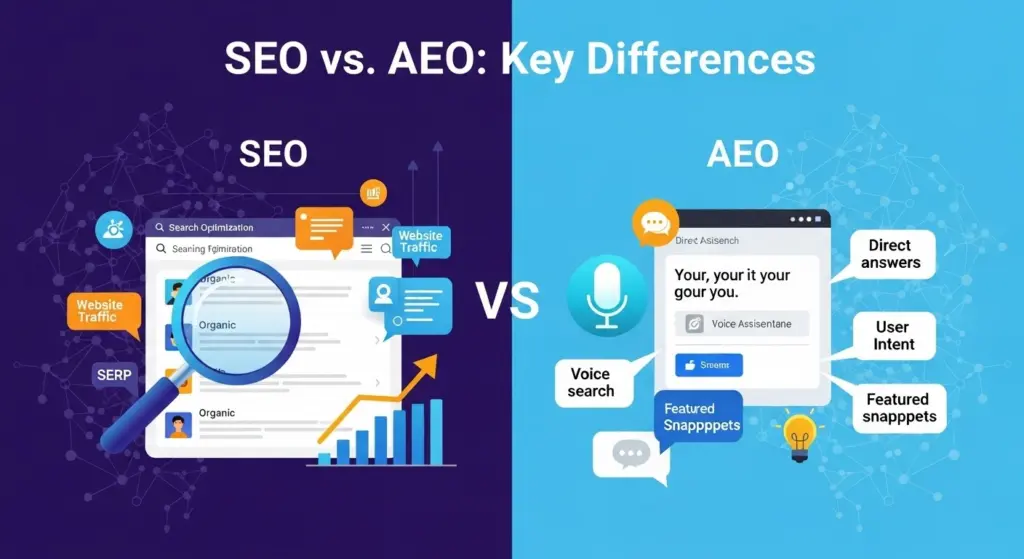
Focus of Optimization
- SEO focuses on ranking web pages in search results
- AEO focuses on providing the best possible answer
Content Structure
- SEO emphasizes keywords, backlinks, and metadata
- AEO emphasizes clarity, structure, and direct responses
User Intent
- SEO targets search queries
- AEO targets questions and conversational intent
Output Format
- SEO delivers traffic to websites
- AEO delivers answers directly to users
In 2026, both approaches are important, but AEO is becoming increasingly critical.
How AI Search Understands Content
AI systems analyze content differently from traditional search engines.

They focus on:
- Semantic meaning, not just keywords
- Context and relationships between concepts
- Question-and-answer patterns
- Structured data and headings
- Source credibility and consistency
This means content must be:
- Clearly written
- Logically organized
- Easy to scan and interpret
- Free from ambiguity
Core Principles of AEO-Friendly Content
To optimize for AI search, content should follow these principles.
1. Write Clear, Direct Answers
Each important question should have:
- A short, precise answer
- Placed immediately after the question
- Written in simple language
Avoid long introductions before answering.
Example:
Question: What is AEO?
Answer: Answer Engine Optimization is the practice of optimizing content so AI systems can extract and present it as a direct answer.
2. Use Question-Based Headings
AI systems often identify answers under headings.
Use formats such as:
- What is…
- How does…
- Why is…
- When should…
This helps AI match your content to user queries.
3. Structure Content Logically
Well-structured content improves machine understanding.
Use:
- H2 for main sections
- H3 for subtopics
- Short paragraphs
- Bullet points for lists
Avoid large blocks of text.
4. Focus on Topical Depth, Not Just Keywords
AEO favors topic coverage, not keyword repetition.
Instead of repeating one phrase, explain:
- Definitions
- Causes
- Processes
- Examples
- Limitations
- Related concepts
This builds semantic richness.
5. Prioritize Accuracy and Verifiability
AI systems prefer:
- Fact-based statements
- Neutral tone
- Consistent information
- Updated content
Avoid:
- Speculation
- Exaggerated claims
- Unsupported opinions
The Role of Structured Data in AEO
Structured data helps AI understand content faster.
Important formats include:
- FAQ schema
- How-To schema
- Article schema
- Definition-style formatting
Although structured data does not guarantee selection, it improves content clarity and machine readability.
Voice Search and Conversational Queries
Voice search is a major driver of AEO.
Voice queries are:
- Longer
- More natural
- Question-based
- Intent-focused
Examples:
- “How does AEO work?”
- “What is the difference between SEO and AEO?”
- “How do I optimize content for AI search?”
Optimizing for conversational language improves both voice and AI search visibility.
Content Types That Perform Well in AEO
Some formats are especially effective for AEO.
High-Performing Formats
- Definitions and glossaries
- Step-by-step guides
- How-to articles
- Comparison articles
- FAQs
- Explanatory blog posts
These formats naturally align with answer-based systems.
Measuring Success in an AEO World
Traditional SEO metrics focus on:
- Rankings
- Click-through rate
- Traffic volume
AEO introduces new challenges.
Success indicators may include:
- Being cited as a source in AI answers
- Inclusion in featured answer boxes
- Visibility in voice responses
- Brand mentions in generative results
While measurement tools are still evolving, content quality and clarity remain the foundation.
Preparing for the Future of Search
AEO is not a replacement for SEO. It is an extension.
The future belongs to content that:
- Answers real questions
- Explains concepts clearly
- Is easy for machines to understand
- Serves users first
Writers, marketers, and publishers who adapt early will have a strong advantage in the AI-first search ecosystem.
Conclusion
In 2026, search is no longer only about ranking pages; it is about becoming the answer.
Answer Engine Optimization represents a shift from keyword-driven strategies to clarity-driven content creation. By writing structured, accurate, and question-focused content, publishers can remain visible in a world increasingly shaped by AI.
SEO brought content to the top of search results.
AEO brings content directly into the answer.
The future of search belongs to those who understand both.
About Guest Author
I’m Zain Ali, a Top-Rated Plus SEO Specialist on Upwork with experience working with 280+ clients worldwide, now focused on the next phase of search, AI SEO, and Answer Engine Optimization. While most marketers are still chasing traditional rankings, I help brands adapt to how search actually works today, where AI systems determine visibility, trust, and recommendations.
I partner with startups, agencies, and established businesses globally to build future-ready, data-driven SEO strategies optimized for Google Search, Google AI Overview, ChatGPT, Gemini, and other AI-powered search experiences.