











Our Blog
How to Choose the Right Digital Marketing Strategy for Business Growth
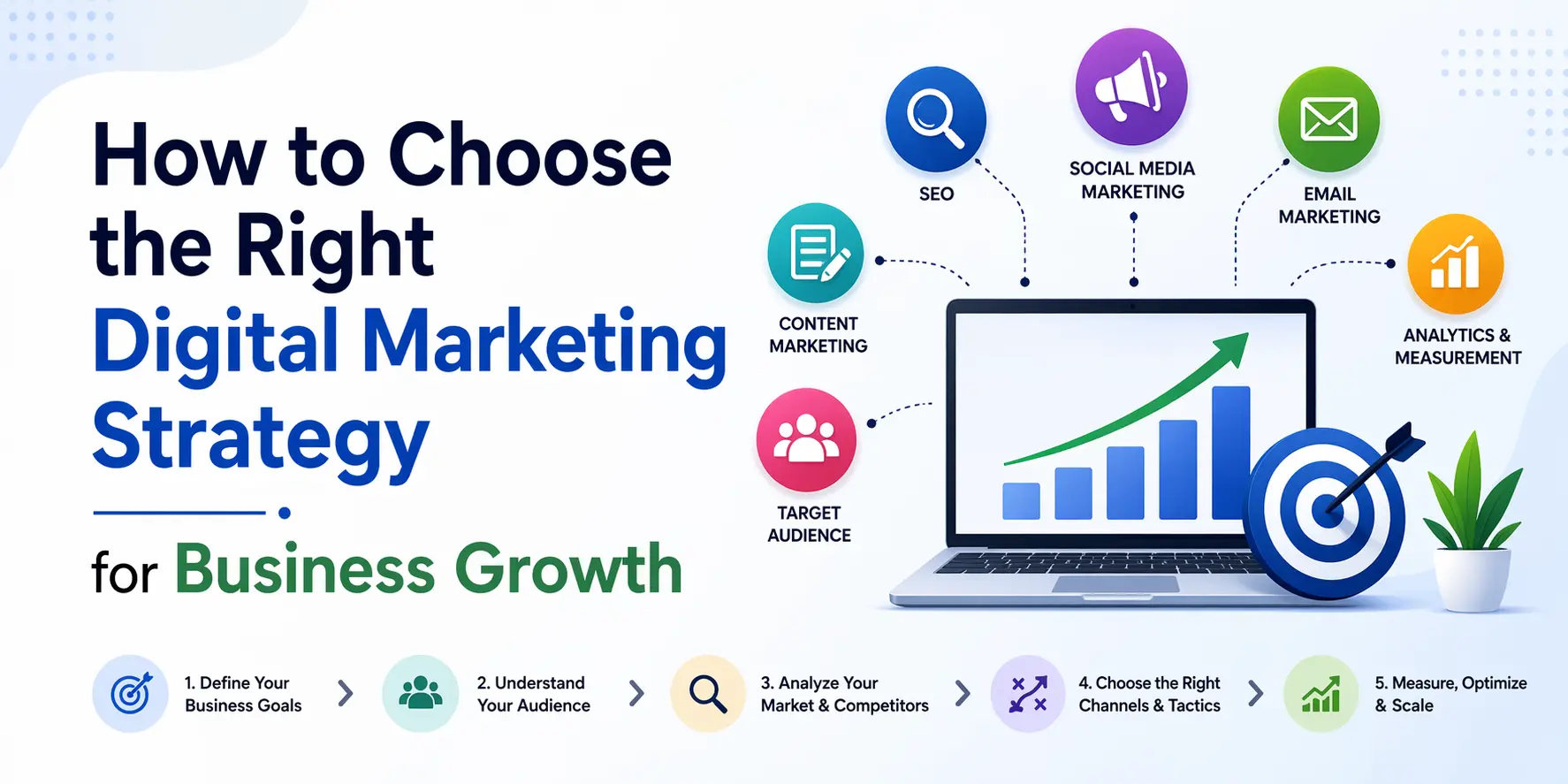
Choosing the right digital marketing strategy is one of the most important decisions a business owner will make.
The wrong strategy wastes time and money. The right one creates a steady flow of leads and customers month after month.
Many businesses make the mistake of copying what competitors do or chasing the latest marketing trends without thinking about what actually fits their own situation.
The truth is, there is no single strategy that works for every business. Your strategy should be built around your specific goals, your audience, your budget, and your strengths.
In today’s competitive market, many businesses struggle to decide what to do next in digital marketing. Muhammad Eassa is a Digital Marketing Consultant helping businesses build the right strategy, drive predictable growth, and integrate AI to improve efficiency and scale.
This guide walks you through a clear process for choosing the right digital marketing approach for your business, step by step.
Step 1: Get Clear on Your Business Goals
What Do You Actually Want to Achieve?
Before thinking about any marketing channel or tactic, get very clear on what you want. Do you want more website traffic? More leads? More sales? Better brand awareness?
Every one of these goals requires a different approach. If you want quick leads, paid ads might be the right choice. If you want long-term organic traffic, SEO and content marketing are better fits.
Set Specific Targets
Vague goals produce vague strategies. Instead of saying you want more customers, say you want fifty new customers per month. That kind of specific target gives you something to measure and build a strategy around.
Know Your Timeline
Are you looking for fast results or long-term growth? Some strategies like paid advertising can produce results quickly. Others like SEO take longer but continue to deliver traffic for years.
Step 2: Understand Your Target Audience
Who Is Your Ideal Customer?
You cannot market effectively to everyone. The more specific you are about who your ideal customer is, the more relevant your marketing will be.
Think about their age, location, job, interests, problems, and goals. Write it all down. Build a clear picture of the person you are trying to reach.
Where Does Your Audience Spend Time Online?
Different audiences use different platforms. If you are targeting young people, TikTok and Instagram might be most effective. If you are targeting business professionals, LinkedIn is the better choice.
What Problems Are They Trying to Solve?
Your marketing should speak directly to the problems your audience is trying to solve. When people feel like you truly understand their situation, they are much more likely to trust you and buy from you.
Step 3: Evaluate Your Budget and Resources
How Much Can You Spend?
Be honest about your budget before making any strategy decisions. Some channels require significant spending to be effective. Others can be done well with more time than money.
Do You Have Internal Capacity?
Some strategies require consistent effort over time. If you don’t have internal capacity, you will need to factor in the cost of outsourcing this work to an agency or consultant.
What Are You Already Doing Well?
Look at your current marketing activity and find what is already working, even if only a little. It is often smarter to double down on what already works than to completely start over with something new.
Step 4: Choose the Right Marketing Channels
SEO and Content Marketing
Best for businesses that can invest time and effort over six to twelve months. If your customers search on Google for what you offer, SEO will bring in highly qualified traffic for free over time.
Paid Advertising
Best for businesses that need leads quickly and have budget to invest. Paid ads can bring traffic and leads from day one, but they require ongoing budget and management.
Social Media Marketing
Best for businesses that want to build a community, increase brand awareness, and engage with their audience regularly.
Email Marketing
Best for businesses that have or are building a customer database. Email is one of the highest-return marketing channels available.
Combining Multiple Channels
The strongest strategies usually combine several channels that work together. Content marketing supports SEO, which brings organic traffic that gets captured through email, which then converts through nurture campaigns.
Step 5: Build a Simple Action Plan
Start With One or Two Channels
Trying to do everything at once leads to poor execution across the board. Start with one or two channels where you can do a really good job. Get results there first, then add more channels over time.
Create a Content Calendar
Plan your content in advance. Know what you will post, write, or send out over the next thirty to ninety days. This keeps you consistent and makes execution much easier.
Set Review Points
Every sixty to ninety days, step back and look at your numbers. What is working? What is not? Use this review to adjust your strategy based on real data.
Common Mistakes to Avoid

Chasing Trends Without a Foundation
Every few months a new platform or tactic becomes popular. Build a solid foundation first, then experiment with new things alongside it.
Ignoring Data
Marketing without tracking is guessing. Set up proper analytics from the start. Know where your traffic comes from, what converts, and where people drop off.
Being Inconsistent
Posting twice a week for a month and then stopping for three months will not produce results. Consistency over time is what builds real results.
Final Thoughts
Choosing the right digital marketing strategy is not about picking the most popular channel. It is about understanding your business, your audience, and your resources, and then building a plan that fits all three.
Take your time with this decision. A well-chosen strategy will save you years of wasted effort.